Star Art Studio Coloring Clipart Embroidery Review
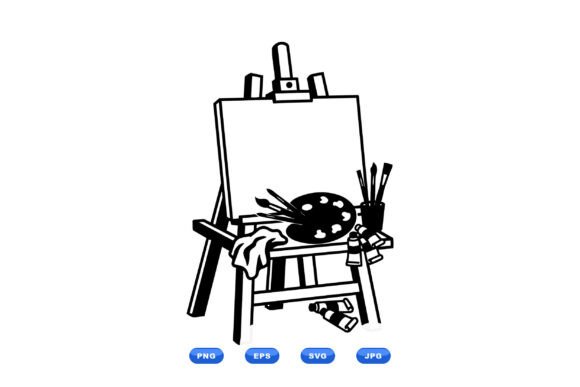
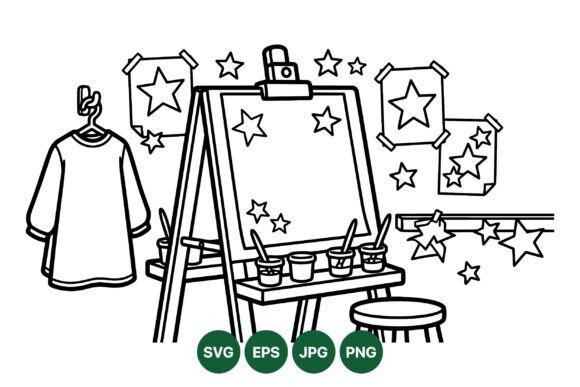
When I first opened the file for Star Art Studio Coloring Clipart, my immediate reaction was a sense of nostalgic warmth. As someone who has spent years turning digital graphics into tangible, stitched treasures for clients and craft fairs, I know that not every illustration translates well to thread. This piece is different. It presents a black and white line art vector depicting a charming preschool classroom setup. We are talking about an easel holding paint pots and brushes, a small stool, a hanging shirt, and star-shaped drawings adorning the walls and railings. It feels like a snapshot of creativity frozen in time, perfect for anyone looking to inject a bit of educational charm into their embroidery projects.
The visual personality of this design is its strongest asset. It does not scream for attention with bold colors or complex gradients; instead, it whispers with clean lines and simple shapes. For an embroidery designer, this simplicity is gold. It suggests a project that relies on texture and stitch quality rather than intricate color blending. When I imagine this as a finished product, I see a soft, inviting aesthetic that fits perfectly into nursery decor, boutique children's clothing, or even a custom apron for a creative teacher. The layout is balanced, offering plenty of negative space around the central easel, which allows the eye to rest while still appreciating the details of the hanging shirt and the scattered stars.
I recently considered using this specific design for a custom embroidered tote bag intended for a local school supply drive. The concept was to create a practical gift that teachers would actually use while keeping the vibe fun and artistic. The classroom theme of Star Art Studio Coloring Clipart made it an obvious choice. However, moving from screen to fabric requires careful planning. The original graphic is a line art vector, which means we have to decide how to interpret those lines during digitizing. Will we rely on satin stitches for the outlines of the easel? Will we use fill stitches for the paint pots? Or perhaps a mix of running stitches to mimic the sketchy feel of the original drawing?
In real-life application, this design shines brightest when applied to larger surface areas where the details can breathe. A sweatshirt chest pocket or a full-back print on a tote bag would be ideal scenarios. The hanging shirt and the stool provide distinct shapes that hold up well under the tension of embroidery. The star-shaped drawings on the walls offer opportunities for playful accents, perhaps using a slightly different thread color to make them pop against a neutral background. If you are an Etsy seller or a small business owner, this kind of imagery resonates deeply with parents and educators looking for personalized gifts. It tells a story of learning and play, which adds emotional value to the finished product beyond just the utility of the item.
However, there are situations where this design requires caution. If you are working with a very small hoop size, such as those used for caps or hat brims, the detail level might become muddy. The lines connecting the paint pots to the easel could get lost if the stitch density is too high or the fabric is too textured. Similarly, on thin or stretchy fabrics, the structural integrity of the design depends heavily on your stabilizer choice. Without proper support, the weight of the fill stitches could cause the fabric to pucker, ruining the clean look of the classroom scene. Dark fabrics also present a challenge; since the original is black and white, the contrast needs to be carefully managed with bright thread colors to ensure the stars and the easel stand out clearly.
For commercial embroidery projects, especially those destined for mass production or frequent washing, the durability of the design elements matters. The small details, like the handles on the paint pots or the legs of the stool, should be reinforced during the digitizing process. If these tiny corners are left too delicate, they may snag or wear down quickly after a few wash cycles. This is particularly important for baby items or kitchen towels, which undergo rigorous cleaning. I always advise testing the design on scrap fabric first to check thread color contrast and review stitch density before committing to the final product. A good rule of thumb is to inspect the small details closely under a magnifying glass to ensure no gaps appear in the satin stitches.
The versatility of this graphic extends beyond just apparel. Imagine a pillow cover featuring the easel and stars, creating a cozy reading nook for a child. Or consider a set of tea towels for a bakery that wants to emphasize a "homegrown" or "creative" brand identity. The Star Art Studio Coloring Clipart works beautifully as a centerpiece for these decorative pieces. It also serves as an excellent subject for printable mockups. If you sell digital products or need to showcase your work to potential clients, having a high-quality rendering of this design on various backgrounds can significantly boost buyer engagement. It helps customers visualize the final result, building trust in your craftsmanship.
From a branding perspective, using a design with such a clear theme helps establish consistency. If your shop focuses on educational themes, handmade gifts, or children's accessories, this image aligns perfectly with your narrative. It signals professionalism and attention to detail. Customers appreciate designs that look intentional and well-executed. When a customer sees a crisp, well-stitched version of a classroom scene on a patch or a hoodie, they perceive higher value in the item. This perception is crucial for handmade sellers competing in a crowded marketplace like Etsy or at craft fairs.
Before you start stitching, remember to confirm licensing terms. Even though this is a digital graphic, the rights to use it for commercial purposes—selling finished items or distributing digital files—must be verified. Ensure you understand whether you can modify the design or if it must remain as is. Also, consider the file format compatibility with your embroidery machine. While the description mentions it is a vector, you will need the appropriate digitized file (likely .pes, .dst, or .exp) to run it on your machine. If exact stitch counts or hoop sizes are not provided in the product details, you must test the design yourself to determine the optimal settings.
Ultimately, Star Art Studio Coloring Clipart is more than just a pretty picture; it is a versatile tool for creative entrepreneurs. Whether you are making a personalized gift for a new teacher, creating merchandise for a craft business, or simply experimenting with new techniques, this design offers a solid foundation. Its clean lines and thematic depth allow for a wide range of interpretations, from traditional satin stitch borders to modern applique styles. By paying attention to fabric selection, stabilizer usage, and stitch density, you can transform this simple line art into a stunning finished product that delights recipients and elevates your brand.
So, if you are ready to take your embroidery projects to the next level, give this design a try. Test it on a variety of materials, experiment with different thread colors, and watch as the humble classroom scene comes to life in thread. With the right approach, Star Art Studio Coloring Clipart can become a staple in your collection of design assets, bringing joy and creativity to every project you undertake.